Surety underwriters are paid to be skeptical. Their job is to look past glossy proposals and assess whether a contractor can actually finish the work they plan to start. Two lenses dominate that assessment: the contractor’s work history and the current backlog. One shows what has been accomplished and how it was managed. The other shows what lies ahead, with all its pressures on cash flow, field supervision, and decision making. Together, they shape the size, price, and timing of performance bonds, and in many cases they decide whether a bond gets issued at all.
I have sat across the table from both sides of this conversation, listening to surety underwriters ask pointed questions while project executives massage schedules and cash forecasts. When the room gets tense, it is almost always because work history and backlog don’t line up. A team claims it can handle a $25 million school, yet the largest job in its portfolio peaks at $9 million and the PM who delivered it just left. Or the contractor’s historical gross margins run 8 to 10 percent, but the painted forecast shows 12 percent on a full slate of overlapping public jobs. Underwriters recognize patterns like that, and they price accordingly.
This is a practical guide to how those two factors really drive bond decisions for performance bonds and payment bonds, why the nuance matters, and how to present your company’s story in a way that earns confidence without overpromising.
Why underwriters lean so hard on work history
Underwriters do not manage jobs, they manage risk. Lacking a front row seat, they rely on evidence, and past performance is the best evidence available. They are not only asking whether your team finished projects, but how they performed while the pressure was on.
Consider a paving contractor that grew out of a family asphalt plant. For years they executed tidy $1 to $3 million street programs with gross margins around 12 percent and negligible claims. Then they chased an $18 million interstate interchange that doubled their annual revenue and included a flyover bridge. The surety combed through the contractor’s work history and found three things that mattered: no self-performed bridge work, no projects with that level of traffic control complexity, and no experience with the DOT’s accelerated payment deductions tied to lane closures. The underwriter issued the bond, but only after requiring a joint venture with a bridge specialist and imposing a funds control agreement. The price went up, and the structure reflected the underwriter’s view of historical capability.
Work history carries specific signals that underwriters watch closely.
- Relevance of scope. It is not enough to say “we have built schools.” If you are stepping from single-story elementary schools to a four-story, steel-framed high school with a central plant and a complicated phasing plan, your old completions only get you partway. Underwriters look for like-for-like elements: structural systems, MEP intensity, site constraints, regulatory oversight, commissioning, and warranty requirements. Contract delivery method. A clean track record on negotiated design-build does not fully translate to low-bid hard-bid work with razor-thin margins and adversarial contract terms. The surety will consider both the pricing environment and the risk allocation you accepted in your past contracts. Project size and concurrency. A single $10 million job managed by your A team is different from three concurrent jobs of $3 to $5 million each, managed by mid-level PMs and superintendents. Underwriters look at how many projects your company has run at the same time, the aggregate value, and the staffing model that supported that concurrency. Margin fidelity. The surety studies the relationship between forecasted gross margins and final results. If you consistently book at 10 percent and close at 9 to 11 percent, it reads as disciplined. If you book at 12 percent and close at 4 percent with late write-downs, it reads as weak cost control and wishful forecasting. The pattern matters more than an individual outlier. Claims and disputes. Every contractor ends up in a dispute eventually. The question is how you got there and how you got out. Repeated mechanic’s liens from subs, multiple liquidated damages events, or a habit of slow-pay complaints will spook an underwriter more than a single litigated change order on a problematic owner design.
The nuance gets lost when contractors present work history as a résumé. Underwriters want candid context: what went wrong, who fixed it, and what changed in the company so it will not recur. A builder who explains how a botched mechanical buyout on a hospital taught them to bring a mechanical preconstruction specialist in earlier usually earns more trust than a builder who pretends the job was a win because it merely broke even.
Backlog as a living stress test
Backlog is the real-time treadmill the company is already running on. It drains bonding capacity if it is heavy, inflates capacity if it is profitable and turning to cash, and determines how much senior attention the next project will actually get. When underwriters ask for a backlog schedule, they are not just tallying totals. They are studying composition, duration, cash conversion, and concentration.
Two backlog charts can look identical on paper: $45 million over the next 12 months, 10 percent gross margin, across eight jobs. One of those charts may represent a stable organism, the other a looming blow-up. The difference lies in things like front-loaded sitework on four projects that will pump cash in early, a mature sheet metal sub that always hits dates, or a stacked set of MEP-heavy interiors that will gang up in month nine when the same PM is also supposed to deliver a turnover on a data center. Underwriters learn to recognize the tells.
A construction CFO once showed me two backlogs separated by eighteen months. The first had a beauty-contest curve: revenue rising steadily, margins healthy, and an even mix of public and private work. The second had a steeper peak and more public work chasing the same fiscal year end. The surety flagged the change, not because big revenue is bad, but because the labor market had tightened and the electrical trade partner who carried three critical jobs had filed bankruptcy in the interim. The same $60 million of backlog became more dangerous because it depended on a weaker supply chain and more overlapping peak months.
Backlog forces underwriters to estimate how everything will collide. They look at:
- Aging and burn rate. Jobs that were 60 percent complete three months ago and still read 60 percent are a red flag. Slow burn often hides delayed billing, under-approved change orders, or staffing gaps. Subcontractor layering. If 70 to 80 percent of your production is subcontracted, who are the top ten trade partners across the backlog? Does one roofer sit on five jobs? Is the structural steel fabricator at capacity? Sureties track subcontractor defaults, and they knit that intelligence into their view of your backlog. Owner type and payment speed. Public owners bring more paperwork, pay slowly in some jurisdictions, and enforce notice provisions rigidly. Private owners vary widely. A backlog heavily tilted to slow-paying owners increases the need for working capital and lines of credit. Geography. Jobs two states away look manageable at bid time, then drain senior supervision once they start. Overnight trips chew up your project executive’s week and slow decisions by a day or two at each hinge point. That lag changes outcomes. Seasonal risk. In northern markets, a backlog stacked with winter foundations forces you to decide whether to pay for ground heaters or to compress schedules in spring. Either move can crush margin if you did not price it.
Underwriters are trying to predict friction. A polished backlog schedule with neat columns is less convincing than a narrative that explains the pinch points by month and the staffing plan that relieves them.
How work history shapes bond capacity
Bond capacity is not only a function of financial statements and CPA letters. It is also a function of proof. Most sureties, especially in the small to middle market, use a rule-of-thumb ladder as they watch a contractor climb to larger jobs. The first rung is often a “single job” limit, say $5 million, which grows as you accumulate similar-size completions without trouble. The “aggregate” limit may start around two swift bonds investment to three times your single limit and step up as the portfolio proves itself. These are not rigid formulas, but they are common reference points.
What moves the needle is credible, recent history that resembles the work you want bonded. If your largest completed job is $7 million, but one PM on your team has delivered a $15 million job at a prior firm and you have hired his superintendent as well, you can persuade a surety to stretch into an $11 or $12 million job with the right scaffolding: a strong schedule update cadence, monthly WIP reporting, and perhaps a collateral or indemnity structure that aligns interests.
Conversely, a contractor with $20 million of equity can still find their single limit capped at $6 or $7 million if their biggest jobs have been tenant improvements and they are now chasing a ground-up tilt-up warehouse with a complex site package. The equity provides staying power, but the work history does not prove the needed coordination skills.
The age of the history matters. A portfolio of successful schools from ten years ago helps, but a surety will discount it if key managers have retired and the company’s recent years show only small interiors and maintenance work. Sureties lend to the team as much as to the entity. They will ask who wrote the subcontracts on that old school program, who managed the MEP coordination, who handled owner meetings, and whether those people are still on payroll.
How backlog shapes bond pricing and terms
Backlog pressure usually does not stop a bond, but it changes the terms. Price is the obvious lever. A contractor with steady work, prompt pay records, and clean job closeouts can often secure performance bonds at the industry’s lower rate tiers. The same contractor, if their backlog doubles in nine months and absorbs every senior superintendent, might see a quarter-point bump in the bond rate and additional reporting requirements. The surety is pricing the probability that you will need more handholding to keep the train on the rails.
Terms are the subtle levers. A surety can require:
- More frequent work-in-progress reporting, with updated estimated costs to complete. Evidence of subcontractor prequalification on critical trades, including backlogs and EMR verification. Consent-to-subcontract for unusually large or specialized scopes. Funds control on a particular project if cash is tight, usually through a third-party escrow that pays subs and suppliers directly. Co-indemnity or collateral for single projects that stretch capacity, especially when the job mix already leans heavy.
I have seen funds control imposed on a single jail project after a contractor took on a second jail with the same MEP-heavy team. The surety knew that change order fights were likely and preferred to keep cash fenced off from unrelated overhead. The contractor grumbled about the admin burden, then thanked the surety six months later when disputes got rough and the funds control setup kept payments flowing and subs calm.
The interplay: when history and backlog tell different stories
A contractor with pristine work history can still get in trouble if the backlog changes faster than the organization evolves. The most common mismatch arises when a company grows revenue by stacking many medium jobs rather than landing a few larger ones. The leadership believes they are being prudent, but the staff is stretched across too many mobilizations, too many submittal streams, and too many punch lists. The surety reads the backlog and downgrades its comfort, even though the historical completions look strong.
The opposite scenario also happens. A company with a bumpy history might show a backlog that is better curated: one or two anchor projects with predictable owners, ample preconstruction involvement, and conservative staffing. An underwriter might restore some capacity on the strength of that backlog discipline, especially if paired with evidence that the company learned from prior losses and changed practices.
I worked with a site contractor that took a beating on a winter-heavy subdivision when it chased volume and ignored schedule float. The following year, they shrank revenue by 25 percent, fired an overconfident project manager, and switched to an “earthworks first” mix of highway jobs with favorable winter allowances. The surety increased their single limit despite the prior year’s losses because the backlog story was coherent and the team changes were real.
What makes an underwriter pause or pass
When a bond request lands on an underwriter’s desk, a few recurring factors slow things down or shut them down altogether. These are not abstract red flags. They are patterns that directly link work history and backlog to likely outcomes on a bonded job.
- Unreconciled WIP schedules. If the sum of the job schedules does not tie to the income statement or if the estimated costs to complete swing widely month to month without a narrative, the underwriter assumes poor cost control. It signals that you will find surprises late rather than manage them early. Top-heavy concentration. Fifteen percent or more of annual revenue in a single owner or a single general contractor can be fine, but only if the relationship is deep and the payment history is strong. If your top customer is also piling retention or drawing out approvals, the surety sees a cash choke point. Calendar pileups. A backlog that peaks field staff and MEP trades in the same three-month window is a known hazard. Underwriters will ask to see the specific plan for smoothing that load, not just “we will hire or supplement with temp supers.” In most markets, qualified superintendents and foremen are not available on two weeks’ notice. Unknown subs on critical scopes. Switching to a cheaper mechanical or electrical subcontractor on a large public job because the usual partners are booked can help win the bid and hurt the bonded outcome. If the underwriter cannot recognize the names in your buyout plan, they assume more management burden and higher default risk. Glossed-over losses. If your last school project finished with a 4 percent margin against a 9 percent target, the underwriter wants to hear the anatomy of that miss. Was it winter heat? Commissioning? A late steel delivery that rippled through finishes? Without a clear postmortem and a process change, they assume the same will recur when stressed.
These are the moments where candor can salvage a decision. The surety knows every contractor has scars. What matters is whether the scars changed how you do the work.
Presenting your work history so it actually helps you
Many contractors hand over a project list and believe they have “told their story.” A better approach is to curate the story to match the bond you are seeking.
Start with three to five anchor projects that resemble the proposed job in size, scope, and delivery method. For each, present a one-page narrative with:
- Original contract value, change order value, and final value, with reasons for significant changes. Scheduled and actual substantial completion dates, and the reasons for any slippage. The core team names and whether those people remain on staff and available. Two to three pivotal decisions or obstacles and how you resolved them, especially where you protected the schedule without giving away margin. Safety and claims notes, including OSHA recordables if material and whether any subcontractor defaults occurred.
Supplement those with a short paragraph framing your company’s trajectory: what has changed in your staff, your preconstruction process, or your trade partner bench that positions you for the proposed job. If your new director of precon spent a decade at a mechanical design firm and your backlog contains more MEP-intense jobs, say so plainly.
Financials still matter, but the narrative often moves the needle more than the balance sheet, especially for contractors at an inflection point in size or complexity.
Making backlog easier for an underwriter to trust
Backlog schedules can be sterile. The goal is to make them specific enough that a reader unfamiliar with your business can see the business working month to month.
At a minimum, provide a rolling 12- to 18-month view with monthly revenue, gross margin, billed-to-date, estimated cost to complete, and cash collections assumptions by job. Then add two short layers of context:
- A staffing overlay that shows which PMs and superintendents are assigned to which jobs by month, with a simple indicator when any individual exceeds a realistic load. If your plan relies on adding a PM in month four, say whether that hire is signed and when they start. A risk note for each job that names the one or two most likely friction points and your mitigation plan. For a hospital addition, it might be “MEP coordination around existing utilities, mitigated by early laser scan and weekly BIM clash reviews with subcontractors under precon agreements.” For a school, it could be “long-lead switchgear, mitigated by substitution options and pre-award confirmation of manufacturer slots.”
Underwriters are comfortable with risk that is named and managed. They fear risk that is unacknowledged.
Where performance bonds fit into the picture
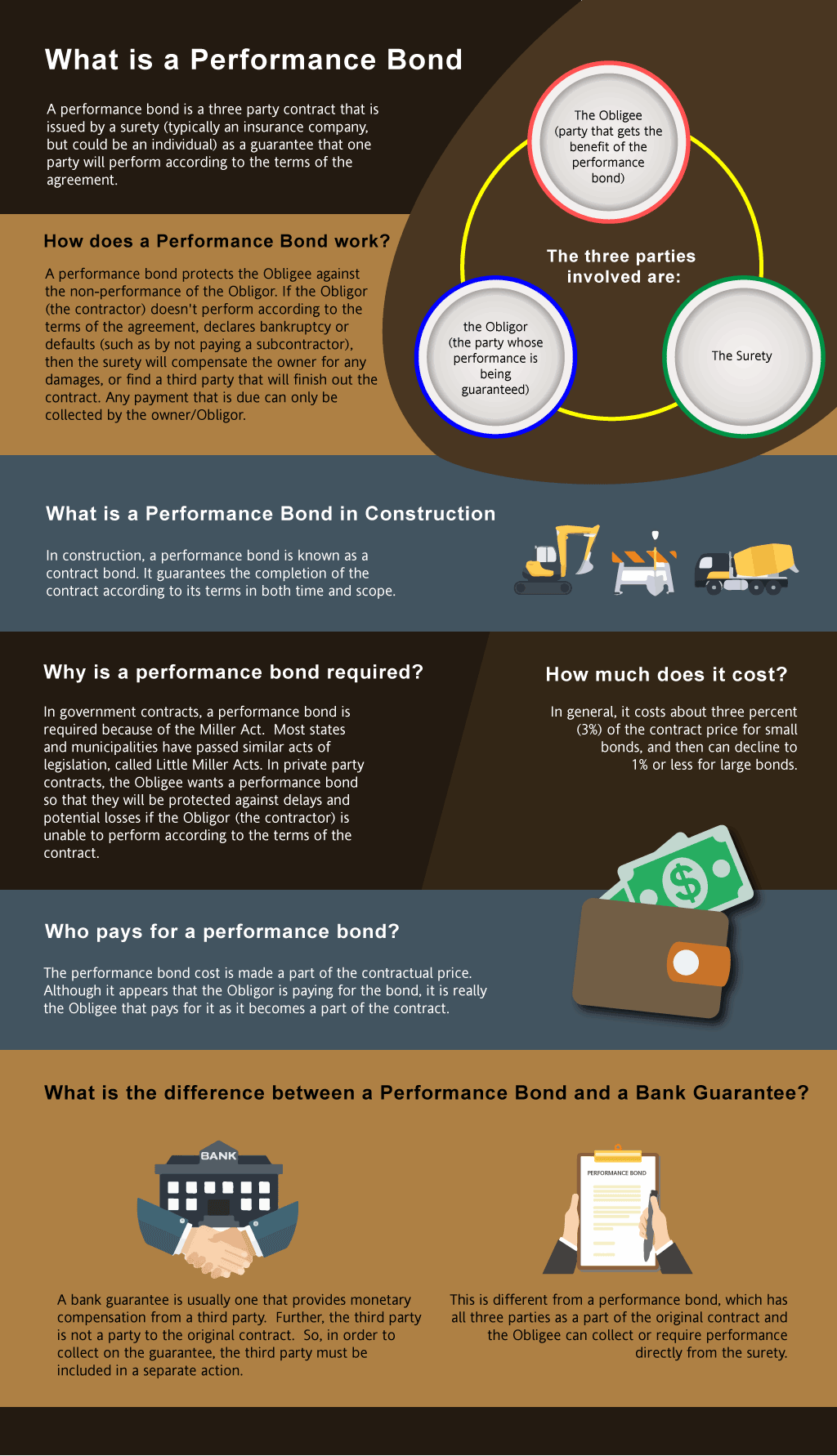
Performance bonds and payment bonds are the instruments that translate an underwriter’s judgment into a guarantee the owner can rely on. They are not magic. A performance bond does not finish a project for you. It buys the owner assurance that if you falter, the surety will finance you to complete, hire a replacement, or pay to cure defined defaults.
From the contractor’s side, performance bonds impose a mirror. The moment a claim seems possible, the surety looks back through your work history and backlog to decide whether to support you or to take over. The same factors that drove the original underwriting reappear: how similar jobs have fared under pressure, how many other commitments are tugging at your staff and cash, and whether your monthly reporting shows control or confusion.
Contractors sometimes think of performance bonds as a checkbox required by a public owner. Smart contractors view the underwriting process as a free external audit of their readiness. If your surety is nervous about the concentration of MEP work hitting in August and September, that worry is not an administrative nuisance, it is an operational issue. Listening to it can save your margin.
A practical example: two bids, one decision
Imagine a regional general contractor with $80 million in annual revenue, average job size of $5 to $8 million, and a good safety record. They see an opportunity to bid a $22 million high school with complex phasing and a new natatorium. Their largest completed job to date is a $12 million middle school. Their backlog includes three schools already, one finishing in June, one in September, and one in November, each at $8 to $10 million. The core team for the new high school would be the PM from the June job and the superintendent from the November job, plus a newly hired assistant superintendent.
The surety looks at the work history and sees alignment on delivery method and owner type. It sees a jump in size and complexity, especially around MEP and pool construction. It looks at the backlog and sees a heavy fall peak that will keep the superintendent tied down through late November, which overlaps with the high school’s site package and early steel.
If the contractor wants approval at a competitive bond rate, they have several levers.
They can adjust team assignments so that the superintendent from the September job, who has pool experience from a prior firm, steps into the high school, while the November job gets a steady superintendent and an extra general foreman to accelerate closeout. They can secure a committed letter from a specialty pool subcontractor with clear milestones, an alternate supplier for long-lead pumps, and a mechanical subcontractor that has delivered two of their prior schools. They can also show an honest cash flow plan that carries heavier preconstruction spend for MEP coordination offset by earlier GMP buyout milestones.
With that package, the surety has a path to yes. Without it, the surety can still say yes, but it will likely price higher and tighten terms, or it may decline if the November job looks shaky or if the superintendent assignments are aspirational rather than contracted.
When to say no to yourself
The hardest part of disciplined growth is turning down the job that would look good on your website. Not every decline reflects a lack of ambition. Sometimes it reflects superior judgment.
A civil contractor I advised passed on a state DOT interchange because the bid date and buyout would have landed three months after his estimator retired and two months before his new equipment financing kicked in. His bench was thin on traffic control phasing, and his top foreman had committed to a wind farm balance-of-plant package. The surety did not forbid the bid. They said they could support it with funds control and a higher rate. The contractor slept on it, looked at his backlog burn, and decided the risk of a congested quarter was too high. A year later, after hiring a traffic control engineer and finishing the wind farm with strong margin, he bid a smaller interchange and won it at a healthy price. The surety increased his single limit based on a clearer fit between work history and backlog.
Self-discipline earns trust. Underwriters remember when you walk away for sound reasons, just as they remember when you stretch wisely and deliver.
How to prepare for a stretch without gambling the company
Most contractors will, at some point, pursue a job that is bigger or trickier than anything they have done. The goal is to make it a managed experiment, not a bet-the-company roll.
A short preflight checklist helps:
- Map your closest comparables, then close the gaps with specific people and partners. If your history lacks a chilled water plant, bring in a preconstruction MEP lead with that experience and name the mechanical subcontractor early. Stage your backlog so peak labor and peak decisions do not collide. If needed, finish or shed a marginal job two months early to free your best superintendent. Lock long-lead strategies before bid. Secure manufacturer slots or approved alternates for gear, air handlers, and specialty components, and price escalation contingencies transparently. Strengthen reporting cadence. Commit to weekly cost-to-complete updates for the stretch job and monthly WIP with narrative for the whole backlog, shared with the surety. Build cash buffers. Line up a temporary increase in working capital or a standby letter of credit so a hiccup on the stretch job does not starve the rest of the portfolio.
If you present this plan with your bond request, you are speaking the underwriter’s language. You are also reducing your actual risk, not just the perceived risk.
What owners should understand about surety decisions
Owners sometimes view bond underwriting as a barrier to award. In reality, a surety’s caution often protects the project. If a contractor’s work history does not match the scope, and their backlog is already stacked, a denial or a conditional approval tells the owner to reconsider the award or to reshape the delivery. Perhaps the right answer is a prequalification phase that forces subs to the table earlier. Perhaps it is a construction manager at risk model that encourages more open-book collaboration.
Owners can help by asking contractors to share not just financial strength, but also recent WIP reports and staffing plans. You would not hand a neurosurgeon four overlapping surgeries in a morning and assume they will sort it out. Construction is less glamorous, but the principle is similar. Capacity is not only money, it is attention. Sureties are one of the few third parties with both the data and the incentive to call that out.
The quiet advantage of telling the truth
Every underwriter I respect says the same thing: surprises hurt more than bad news delivered early. Contractors who own their history, who present backlog with eyes open, and who plan for the hard weeks win better terms over time. They get the nod on tight deadlines because the surety trusts them to show the wrinkle rather than to hide it.
Work history is the spine. Backlog is the current heartbeat. Performance bonds sit in the middle, converting a judgment about those two into a guarantee that lets work proceed. If you want better bond decisions, invest in better history and smarter backlog. The rest tends to follow.